Let’s start with a grounding truth: most real estate investors don’t invest because they love taxes — they invest because they love returns. But what if you could keep more of your
Dated: December 18 2025
Views: 265
Let’s start with a grounding truth: most real estate investors don’t invest because they love taxes — they invest because they love returns. But what if you could keep more of your gains working for you instead of handing a big chunk over when you sell? That’s exactly what 1031 exchanges and Opportunity Zones (OZs) are designed to do.
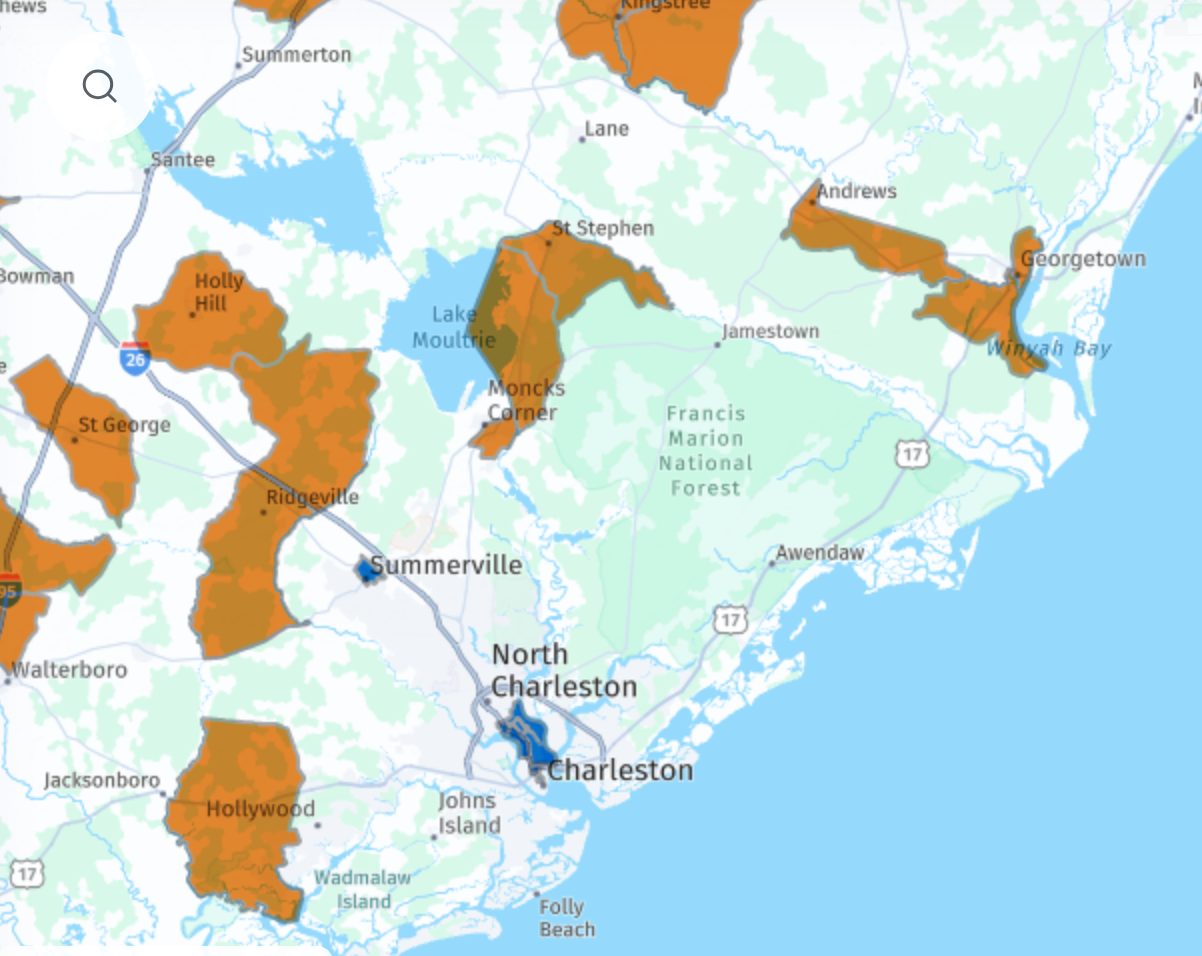
These two strategies are powerful on their own, but they become especially interesting in markets like Charleston and the surrounding tri-county area. And yes — there really are Opportunity Zones right here in the Lowcountry. OpportunityZones.com
A 1031 Exchange lets you sell one investment property and reinvest the proceeds into another like-kind property without recognizing capital gains tax immediately. Instead of paying Uncle Sam today, you keep that money working for you in a replacement property.
Think of it as a roll-forward, not a cash-out. As long as you follow the IRS rules — identify replacement properties in 45 days and close within 180 days — you keep your equity compounding and defer the tax bill for as long as the investment chain continues.
Official tax definitions and the nuts and bolts of this code section are detailed in Internal Revenue Code section 1031. Wikipedia
Opportunity Zones were created under the Tax Cuts & Jobs Act of 2017 to spur private investment into areas that have historically struggled to attract capital. Here’s how they sweeten the deal:
• Defer current capital gains by investing them in a Qualified Opportunity Fund (QOF)
• Reduce your tax burden on the original gains based on how long you hold the investment
• Pay zero capital gains tax on the new investment’s appreciation if you hold it for at least 10 years Wikipedia
So while a 1031 exchange defers gains by trading real estate for real estate, Opportunity Zones let you eliminate the tax on future gains tied to the new investment (if you satisfy the timeline). That’s the piece that gets investors’ eyes to widen. Wikipedia
The Charleston tri-county area has several Opportunity Zones, and while they aren’t always right downtown, they exist throughout Charleston County — including parts of North Charleston and historically underserved neighborhoods near the city “Neck” and Peninsula areas. Charleston County Economic Development
A useful local resource for maps and specific census tract info is the CHS Opportunity Zones site, which lists Opportunity Zone designations and gives investors a way to explore where potential projects or investments might be located around Charleston, Dorchester, and Berkeley counties. CHS Opportunity Zones
You can also explore national and state maps of all Opportunity Zones — including Charleston’s — through the U.S. Department of Housing and Urban Development interactive map. HUD
Let’s get practical. Meet Alex, who bought a rental property years ago in West Ashley for $240,000. Fast forward more than a decade, and that property sells for $440,000 — a tidy $200,000 gain.
Here are two paths Alex might take:
If Alex simply sells the property and keeps the cash:
• Capital gains tax (federal + potential SC state tax)
• Depreciation recapture tax
• Other fees and costs
The total tax could easily run $50,000–$70,000 or more, depending on tax bracket and recapture. That’s money leaving your pocket and heading straight to tax authorities.
Instead of cashing out and paying tax today, Alex does a 1031 exchange into a replacement property — maybe a duplex near Park Circle or a multi-family unit on James Island.
Result:
👉 All $200K stays invested
👉 No capital gains tax today
👉 More buying power and higher cash flow
That deferred tax stays in the investment — where it can compound — instead of being paid out immediately.
Instead of a standard 1031 swap, Alex rolls gains into an Opportunity Zone investment via a Qualified Opportunity Fund.
If Alex holds that OZ investment for 10 years:
• Taxes on the new appreciation can be zero
• The original gain was deferred
• The net result could be a far greater after-tax return than either a standard sale or a 1031 exchange into another traditional rental
That’s why so many investors treat OZs as a longer-horizon play — a strategy not just to defer tax, but to ultimately eliminate tax on future gains. Wikipedia
Charleston’s fundamentals are strong: rising population, steady rental demand, limited buildable land, and neighborhoods that are seeing growth in employment and infrastructure. Even areas near Opportunity Zones can benefit from broader economic uplift.
An investor oriented around long-term appreciation and tax efficiency — especially one who can identify the right projects and partners — may find Charleston’s mix of 1031 exchange targets and OZ-eligible areas strategically compelling.
Here’s one sophisticated strategy investors discuss:
Do a 1031 exchange out of an existing property to defer taxes
Use the proceeds or eventual gains to invest in an Opportunity Zone fund
Hold that OZ investment for 10+ years to eliminate future taxes on appreciation
That layering of strategies plays to the strengths of both approaches and — with the right financial and legal guidance — can be a game-changer for long-term wealth. Wikipedia
These strategies always have conditions and timelines, and they definitely require professional guidance (hello, CPAs and QIs). But the broader takeaway is simple:
• A 1031 exchange helps you keep your equity working
• Opportunity Zones help you keep tax on future gains from ever showing up
• Charleston’s market fundamentals make both strategies worth a look for investors poised for growth
If you’re thinking about selling an investment property, exploring your options for 1031 or Opportunity Zone investing, or just want to run numbers and models for a Charleston portfolio — I’d love to help. Let’s walk through the scenarios and find what makes the most sense for your goals. **I am nota tax professional and this is not tax advice, so definitely speak with your CPA about your specific decision to see if a 1031 exchange or Opportunity Zone investing is right for you.
• Qualified Opportunity Zones vs. 1031 Exchange — Cherry Bekaert Insights (comparison of strategies) SC Opportunity Zone
• Opportunity Zones Frequently Asked Questions — IRS official guidance HUD
• Charleston Area Opportunity Zones map & info — CHS Opportunity Zones (local resource) CHS Opportunity Zones
• Opportunity Zones overview — Wikipedia (tax incentive basics) Wikipedia

Charlsi has lived in eight states and several different countries- so you could say she knows a thing or two about moving! An explorer and travel lover by nature, Charlsi has always felt compelled to ....
Let’s start with a grounding truth: most real estate investors don’t invest because they love taxes — they invest because they love returns. But what if you could keep more of your
Charleston is a dog lover's dream! With its welcoming vibe and plenty of open spaces, this city is perfect for exploring with your furry friend. From sandy beaches to scenic parks, here are some-
 The data relating to real estate for sale on this web site comes in part from the Broker Reciprocity Program of Charleston Trident Association of REALTORS® -- All information deemed reliable but not guaranteed. All properties are subject to prior sale, change or withdrawal. Neither listing broker(s) or information provider(s) shall be responsible for any typographical errors, misinformation, misprints and shall be held totally harmless. Listing(s) information is provided for consumer's personal,
non-commercial use and may not be used for any purpose other than to identify prospective properties consumers may be interested in purchasing. The data relating to real estate for sale on this website comes in part from the Internet Data Exchange program of the Multiple Listing Service. Real estate listings held by brokerage firms other than Living Well Group Charleston | The Boulevard Company may be marked with the Internet Data Exchange logo and detailed information about those properties will include the name of the listing broker(s) when required by the MLS. Copyright ©2026 All rights reserved.
Last Updated: September 12, 2026 6:26 PM UTC
Show More...
The data relating to real estate for sale on this web site comes in part from the Broker Reciprocity Program of Charleston Trident Association of REALTORS® -- All information deemed reliable but not guaranteed. All properties are subject to prior sale, change or withdrawal. Neither listing broker(s) or information provider(s) shall be responsible for any typographical errors, misinformation, misprints and shall be held totally harmless. Listing(s) information is provided for consumer's personal,
non-commercial use and may not be used for any purpose other than to identify prospective properties consumers may be interested in purchasing. The data relating to real estate for sale on this website comes in part from the Internet Data Exchange program of the Multiple Listing Service. Real estate listings held by brokerage firms other than Living Well Group Charleston | The Boulevard Company may be marked with the Internet Data Exchange logo and detailed information about those properties will include the name of the listing broker(s) when required by the MLS. Copyright ©2026 All rights reserved.
Last Updated: September 12, 2026 6:26 PM UTC
Show More...
